Guides Possums
Out: after sunset
Possum in my roof
Let it head out after dark, then block the gap behind it. Don’t trap it, move it or feed it: possums are protected, and DBCA says only trained, licensed people should handle them. DBCA
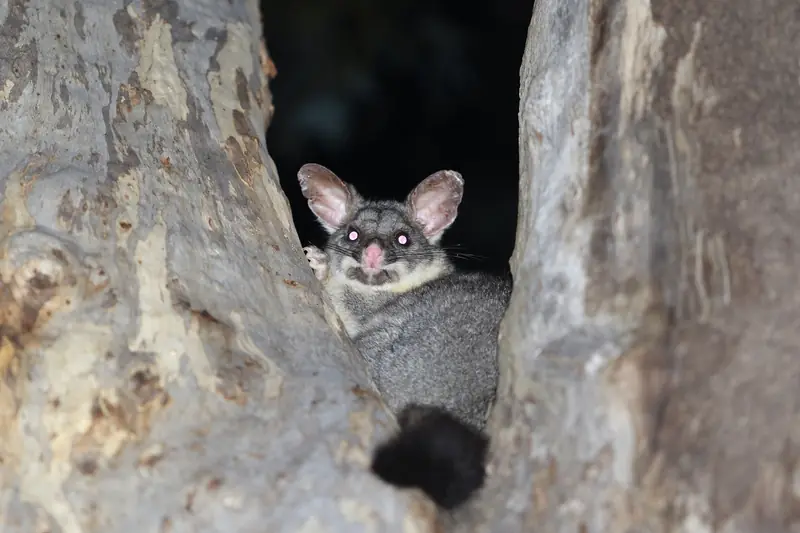
.jpg)
- Size
- 35 to 55 cm nose to rump, plus a 25 to 40 cm tail. 1.2 to 4.5 kg DBCA DBCA A brushtail possum is up to 55 centimetres long with a tail up to 40 centimetres. A western ringtail is up to about 40 centimetres with a 41 centimetre tail. An A4 page is 29.7 centimetres.
- Out
- After sunsetasleep by day in a hollow, or your roof DBCA Australian Museum
- Eats
- Leaves, mostlyplus flowers, fruit and fungi DBCA
- In WA
- Protectedlike all native animals. The western ringtail is Critically Endangered DBCA
How to get a possum out of your roof
without hurting it: it lets itself out every evening. Your job is to lock the door behind it. This is DBCA’s method, and the one it calls the most effective. DBCA
Tonight in Perth sunset
- Find its door. Watch at dusk to see where it comes and goes. Then block every other gap with sheet metal, wood or wire netting, leaving only that one. DBCA
- Wait for sunset. After dark it heads out through that last gap to feed. DBCA
- Block it while it’s out. Close the last gap before it comes home. DBCA
- Listen. If it’s still inside, you’ll know: DBCA says a trapped possum makes a racket trying to escape. DBCA Open the gap again and try another night.
- Make it permanent in daylight, once you’re sure it hasn’t come back, and wash each entry point with disinfectant to hide its scent trail. DBCA
- Give it somewhere else to live. A nest box or a hollow log blocked at one end may keep it nearby, but out of your roof. Trim branches that overhang the house, too. DBCA DBCA
Can you trap a possum
and move it somewhere else? Not in WA, without lawful authority. And it rarely ends well for the possum.
What DBCA says
“Only trained and licenced personnel should handle possums.” Moving them doesn’t work either: possums often die from predators and stress soon after release, so DBCA doesn’t consider relocation humane. Shooting isn’t permitted, and scaring them off doesn’t work. DBCA
What the Act says
Under the Biodiversity Conservation Act 2016, capturing fauna includes trapping and removing it, and that counts as “taking” fauna, which needs lawful authority. Releasing fauna anywhere in the state needs lawful authority too. BC Act
Our reading of the Act, not legal advice. Sick or injured possum? Ring the Wildcare Helpline on (08) 9474 9055. DBCA Elsewhere in Australia, see who to ring in each state and territory.
Possum noises at night
sound like a small rugby match on the roof. Banging in the ceiling, then deep, guttural coughs and sharp hisses, especially in the breeding season. DBCA South Australia’s list adds screams and growls. SA Government
But goannas and phascogales scratch, chew and skitter too, and rats and mice move into roofs in winter, looking for somewhere warm and dry. DBCA The quickest way to tell is to check the droppings.
Possum poo vs rat poo
Rats in the roof? See our rat poison guide first: rat baits can end up poisoning owls. If you do use bait where possums might be, DBCA says to put it inside a length of polypipe fixed to a roof beam. DBCA
What do possums eat
? Mostly leaves, plus flowers, fruit and fungi. In the suburbs, the Australian Museum says, a brushtail “will eat almost anything”. That’s rather the problem. DBCA Australian Museum
Is it OK to feed possums?
No. DBCA says not to feed birds or other wildlife, because it can cause aggression, attract predators, boost numbers unnaturally and spread disease. DBCA In WA, feeding native wildlife without lawful authority is an offence. BC Act s 155
- Bread, fruit, scraps or milk. WIRES lists all four as unnatural foods for possums. Milk can cause diarrhoea and dehydration, and fruit ferments in a ringtail’s gut. WIRES
- Cat or dog food left out. Bring the pet bowls in at night and keep the compost closed: that makes your yard far less interesting to possums. DBCA
- Do this instead: plant local natives, which give wildlife natural food and shelter, and keep a bird bath full of fresh water. DBCA
Western ringtail possum
in your roof? In the South West, your possum may be one of the rarest in Australia. Ringtails have disappeared from around 80% of where they once lived, and they’re Critically Endangered. WA Museum DBCA
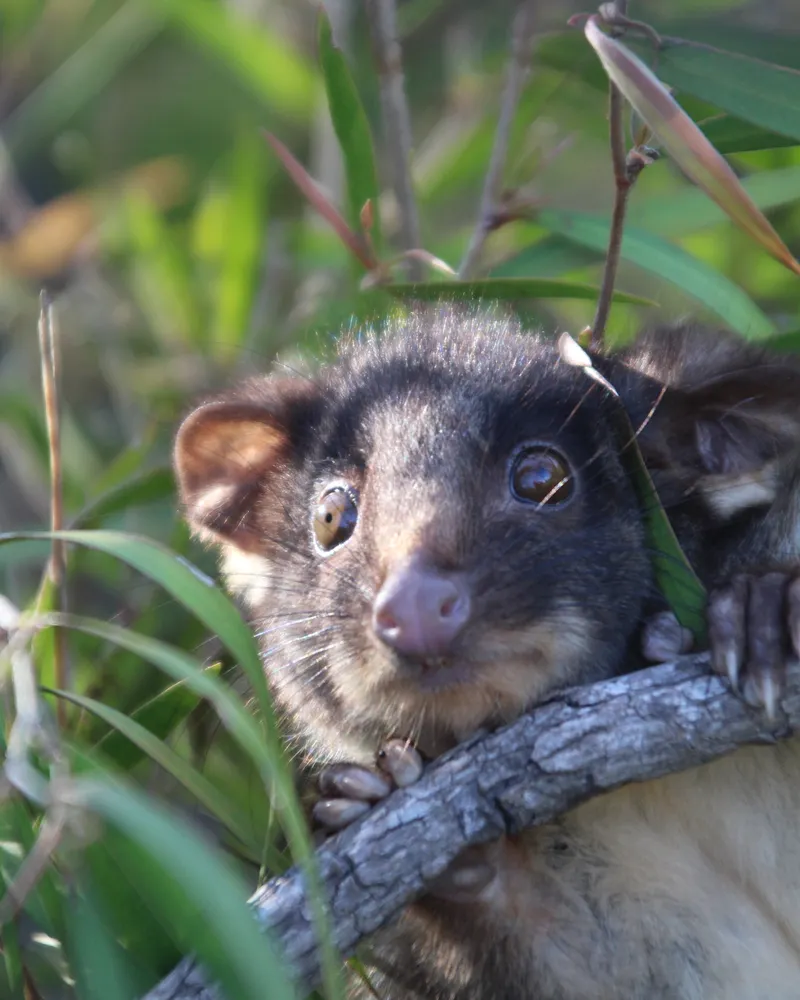
- Where: mostly coastal, with the biggest populations around Albany and from Bunbury to Dunsborough, and smaller, scattered ones around Augusta, Margaret River, Yallingup, Dawesville, Harvey and Collie. DBCA 2014
- In a roof? Use the same night-time method, gently. Ringtails do live in roof spaces, sheds and other buildings in towns. WA Museum Busselton, where the ringtail is the City’s fauna emblem, says the highest densities live between Busselton and Dunsborough, often right among the houses. City of Busselton
- Seen one? DBCA asks you to email a photo or description to fauna@dbca.wa.gov.au. DBCA
- Help them: keep and plant peppermint trees, which make up 95% of their diet, keep cats and dogs in at night, and don’t feed them. City of Busselton WA Museum
Possum box
in a tree: a well-placed one may persuade your possum to nest somewhere other than your roof. DBCA
- Go high. Victoria says at least 3 m up a tree, NSW at least 4 m. Sources differ, so aim for the higher end. Vic Government NSW Government
- Build it thick and plain. Timber 19 to 25 mm thick, for insulation. No treated timber, toxic paint, chipboard or smelly glue, and no sharp edges or nails poking through. Vic Government
- Keep it for natives. Check it now and then, and clear out nests left by mynas, sparrows or starlings. Vic Government
- One possum, one box. Possums are territorial, so if one moves in, it’s likely to keep others away from your roof too. Vic Government
Possum in roof NSW
or Victoria? The night-time method works everywhere, but the trapping rules differ by state. Here’s what each state government says.
Each state’s own wording, as we read it on the dates in the sources. Rules change: check your state’s page before you act. Not legal advice. NT not covered yet.
Are brushtail possums protected
? Yes. That one and the other questions people search most, each answered in its first line.
Are brushtail possums protected?
Yes. All native animals are protected under state and Commonwealth law, and brushtails are native. DBCA The Australian Museum puts it simply: “In Australia, it is a protected species.” Australian Museum
How do you know if you have a possum in your roof?
Can you feed possums cat food?
No. Victoria’s wildlife agency says human food can be dangerous to possums, and DBCA says not to feed wildlife at all. Vic Government DBCA Bring pet food in at night, too. DBCA
Do brushtail possums eat rats?
No. They’re leaf-eaters at heart. DBCA calls brushtails herbivores that eat meat only very occasionally in the wild. DBCA
What is a possum’s Noongar name?
Koomal, for the brushtail. It appears in a DBCA-published study of Aboriginal names for south-west mammals. The western ringtail is ngwayir in DBCA’s papers. Abbott 2001 DBCA 2014 Spellings vary between sources.
Sources, checked 13 October 2026
- Possums: damage prevention and control DBCA Fauna Notes (2017; DBCA lists it as updated 25 Aug 2023): night-time exclusion; nest boxes; trimming branches; “Only trained and licenced personnel should handle possums”; relocation not humane; brushtail 35–55 cm, 1.2–4.5 kg, long oval ears; ringtail 30–40 cm, 0.7–1.2 kg; droppings: possum usually over 2 cm, rat about 1.5 cm, mouse under 1 cm; goannas and phascogales also make roof noise; bait in polypipe; remove pet food at night; ringtail Critically Endangered; sightings to fauna@dbca.wa.gov.au
- Wildcare Helpline DBCA: “A well-positioned possum box will also encourage possums to nest somewhere other than your roof”; don’t feed birds or other wildlife (aggression, predators, numbers, disease); plant local natives; bird bath; the helpline, (08) 9474 9055
- Common brushtail possum Australian Museum (updated 24 Sep 2026): diet of leaves, blossoms and fruits, “but in suburbia it will eat almost anything”; nocturnal, by day in a hollow “or any dark area, even inside house roofs”; “In Australia, it is a protected species”
- Brushtail possum fauna profile DBCA (last updated 8 Feb 2012): head and body 350–550 mm, tail 250–400 mm; herbivores, meat “only very occasionally”; tolerates toxic Gastrolobium leaves; “Deep guttural coughs and sharp hisses are frequent, particularly in the breeding season”; south-west subspecies T. v. hypoleucus
- Biodiversity Conservation Act 2016 (WA) As at 25 Sep 2025. s 5: “capture” includes “to trap, to restrain and to remove”, and “take” includes to capture; s 149 (taking fauna); s 155: “A person must not feed fauna unless the person has lawful authority to feed it”; s 162: release of fauna needs lawful authority. Our reading, not legal advice
- Western ringtail possum WA Museum Boola Bardip (updated 12 Jan 2026): Critically Endangered; only in the south-west; gone from around 80% of its former range; peppermint and eucalypt canopy; eats mainly leaves; sleeps in a drey; lives in roof spaces in towns; keep pets in at night
- Fire information note: western ringtail possum DBCA (2021): dark chocolate brown fur, creamy white or grey belly, short-furred tail with a white tip, smaller rounder ears; “only eat leaves”, preferring peppermint, jarrah, marri and sheoak; dreys
- Habitat for western ringtail possums, southern Swan Coastal Plain Shedley and Williams, Department of Parks and Wildlife, Feb 2014: main populations Albany and Bunbury to Dunsborough; scattered around Augusta, Margaret River, Yallingup, Dawesville, Harvey and Collie; body to 40 cm, tail 41 cm; name “ngwayir”; brushtails tolerate Gastrolobium, which contains 1080 (its status wording is out of date)
- Native flora and fauna City of Busselton: the ringtail is the City’s fauna emblem; highest densities between Busselton and Dunsborough, often in residential areas, in roof spaces and sheds; peppermint makes up 95% of its diet; “do not feed possums”
- Let nature feed itself WIRES: unnatural foods for possums are bread, fruit, food scraps and milk; fruit ferments in ringtails’ guts; milk causes diarrhoea and dehydration
- Living with possums SA Department for Environment and Water fact sheet (Jan 2024): brushtails use “screams, hisses and growls”; “banging noises inside your ceiling space or walls”; possums may only be trapped inside your roof space or built structure; unlawful to trap in the garden or release more than 50 m from your home; a permit is needed
- How to remove a possum from your roof NSW Environment and Heritage (updated 1 Jul 2026): “It is illegal to relocate or kill a possum and to trap or catch and release them without a licence”; licensed release at dusk within 150 m; nest box at least 4 m up
- Possums Victorian Government (updated 15 Jul 2022): “Do not feed possums. Human food can be dangerous to possums”; brushtails in buildings released on the same property within 50 m after sunset; relocation prohibited; nest boxes at least 3 m up, 19–25 mm timber, no treated timber or chipboard; possums are territorial
- How to remove a possum or snake from your house Queensland Government: “trapping possums is illegal in Queensland unless you have a permit” (read 9 Oct 2026)
- Living with brushtail possums Tasmanian Government: protected, not to be taken without a permit; trapping and relocating “does not generally work”; a permit to trap as a last resort (read 9 Oct 2026)
- Possums ACT Government: “Trapping, removing or killing a possum without a licence will result in severe penalties”; licensed removalists listed (read 9 Oct 2026)
- Abbott 2001, Aboriginal names of mammal species in south-west Western Australia CALMScience 3(4): 433–486 (published by DBCA’s predecessor): “koomal [Trichosurus vulpecula]”; ngwayir for the western ringtail
We’re an independent site, not part of DBCA or any state agency, and nobody pays us to link anywhere on this page. Some sources here are older than a year (DBCA 2012 and 2014, and the 2017 fact sheet): we re-read each one on the date above.