Guides Magpie nesting
Magpie eggs, Perth: mid-August to early December
When do magpies nest?
From August. Around Perth most eggs go down between late August and mid-September, and the last in early December. If the birds swoop, DBCA’s advice is to give them room for six to eight weeks, until the chicks can fly. Sources: Rowley 2022 DBCA
Published by Shane, Busselton WA
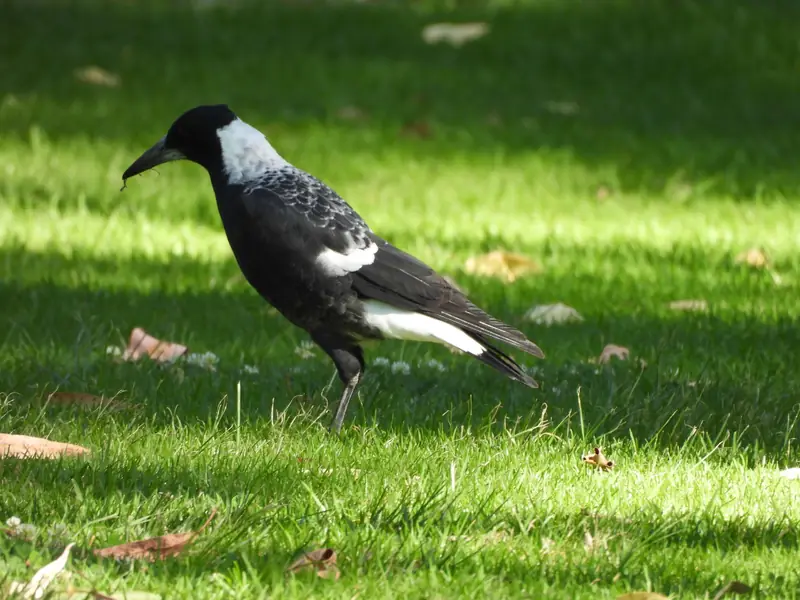
- Nest height
- 10 to 20 m up where 82% of 309 Perth nests sat Source: Rowley 2022 Of 309 nests measured in Guildford, Perth: 8% were under 10 metres up, 82% between 10 and 20 metres, and 10% higher than 20 metres.
- On the eggs
- 21 daysmedian in Perth, and only the female sits Source: Rowley 2022
- In the nest
- About 32 daysthe Perth average, from hatching to leaving Source: Rowley 2022
- In WA
- Protectedtaking a bird or nest needs a permit Source: DBCA
Is it magpie nesting season
right now? From August, and the end depends on whom you ask. DBCA’s fact sheet says August to October; its news page says August to December. A 12-year Perth study had eggs going down from mid-August to early December. Sources: DBCA DBCA Rowley 2022
The short version: eggs from mid-August, chicks from early September, young out of the nest from early October.
First egg 1 Sep: hatching about 22 Sep, out of the nest about 24 Oct, fed by the family until about 23 Dec.
| Source | What it says |
|---|---|
| 12-year study in Guildford, Perth | First eggs from mid-August to early November; all clutches from mid-August to early December; busiest from late August to mid-September. Second clutches busiest from late October to late November. |
| DBCA fact sheet | Magpies breed between August and October. |
| DBCA news page, 2023 | Magpies nest between August and December. |
| One nest, our sums from the Perth averages | 21 days on the eggs, about 32 days in the nest, then fed by the family for about two months. |
| BirdLife Australia | Swooping usually happens while there are young in the nest, or just after they fledge. |
Where do magpies build
their nests? High in a tall tree, usually a gum, and the female builds alone. Sources: DBCA Rowley 2022
She picks the spot and does all the building: a platform of sticks with a cup on top, lined with whatever soft stuff the neighbourhood offers. Height is the point. Up there, the young are out of reach of ground predators. Sources: DBCA Rowley 2022
Magpies aren’t fussy about building supplies. Many Perth nests worked in fencing wire, rope, electrical cable or fishing line, and it cost some birds dearly: three nesting females died tangled in fishing line built into their own nests. One more reason to bin old fishing line. Source: Rowley 2022
They’re locals, not visitors. A magpie group defends a permanent territory, and in the Perth study some nests were used in more than one breeding season. The pair in your street tree this spring may well be back next year. Sources: DBCA Rowley 2022
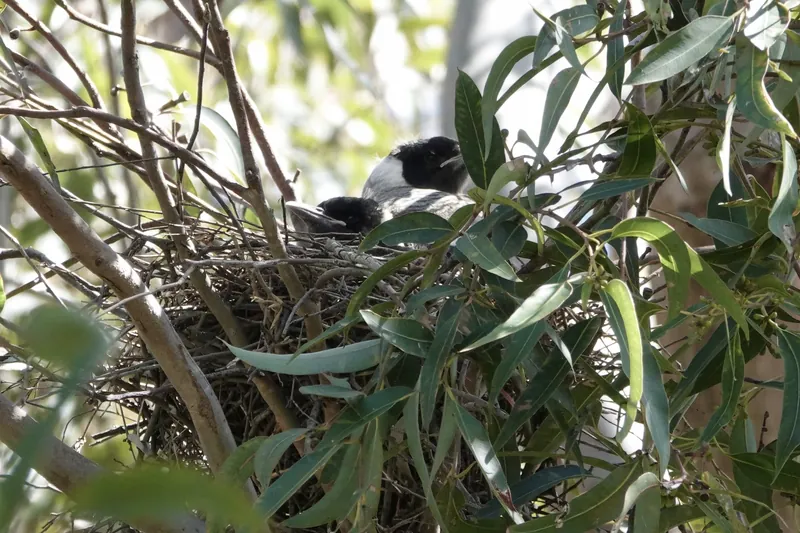
Field notes: the magpie nest
- Built by
- The female, alone. Source: Rowley 2022
- Where
- A complex fork in the outer canopy of a tall tree. Source: Rowley 2022
- Height
- Mostly 10 to 20 m: 82% of 309 Perth nests. Source: Rowley 2022
- Tree
- Eucalypts in 80% of cases, especially flooded gum, sugar gum and marri. Norfolk pines held 20 of 310. Source: Rowley 2022
- Made of
- Sticks, lined with grass, roots and other fibres. Source: DBCA
- Perth extras
- Shredded bark, wool, horse hair, fencing wire, synthetic rope, electrical cable, fishing line. Source: Rowley 2022
When do magpie eggs
hatch? After about three weeks, and then the real work starts. Sources: Rowley 2022 DBCA
-
Day 0 first egg
Eggs
She lays and sits alone. Clutch size depends on whom you ask: up to six (DBCA’s fact sheet), usually three or four (DBCA’s magazine), or three to five (BirdLife). In Perth, the eggs took a median of 21 days to hatch. Sources: DBCA DBCA BirdLife Rowley 2022
-
Day 21 hatching
Chicks
Out come pink, blind, hairless chicks. For the first fortnight she broods them a lot, especially on cold mornings and in rain. She also does most of the feeding (67% of 159 feeds watched in Perth), sometimes helped by adult males in the group, other females and young birds. Sources: DBCA Rowley 2022
-
About day 53 out
Out of the nest
About 32 days in the nest is the Perth average. DBCA says the female feeds the chicks for about four weeks; BirdLife says they fledge after about 35 days. Young birds often leave before they can fly properly. Sources: Rowley 2022 DBCA BirdLife DBCA
-
About day 113 on its own
Feeding itself
About two months out of the nest, Perth’s young magpies could mostly fend for themselves, though some still begged, sometimes successfully. Source: Rowley 2022
Day counts are our sums from the Perth averages.
Not every nest makes it. In Perth, 47.7% of 308 breeding attempts produced at least one fledgling, and the average female raised 0.8 fledglings a season. If a first brood fails, a new clutch may be laid, and second clutches were busiest from late October to late November. That’s why some nests are still busy in December. Sources: Rowley 2022 DBCA
Why do magpies swoop
near their nest? To protect their eggs and young, and it’s mostly bluff. Source: DBCA
A swooping magpie flies low and fast, often clacking its bill as it passes. The whistle of wings is alarming, but DBCA says it’s usually just a bluff. Source: DBCA
Most magpies never bother. DBCA’s magazine puts swoopers at about 10 per cent of magpies, 98 per cent of them males; BirdLife says fewer than 10% of males swoop people. In a Brisbane study of 48 aggressive magpies, every attacker was male. Sources: DBCA BirdLife Warne and Jones 2003
It runs on the nest calendar. Swooping usually happens while there are young in the nest or just after they fledge, and each bird generally swoops for only a few weeks. That’s the red line on the nest strip above. Sources: BirdLife DBCA
- 100 m
- The patch a nesting magpie usually defends, says DBCA. BirdLife says within 50 m of the nest for people on foot, 100 m on a bike. Sources: DBCA BirdLife
- 1 in 10
- Roughly how many magpies swoop, by DBCA’s and BirdLife’s counts, and nearly all are males. Sources: DBCA BirdLife
- The eye
- Strikes are rare, but hospital emergency data show the eye is the most common target. Source: DBCA
Walking past a nest? Detour if you can. If you can’t, wear a hat and sunglasses or carry an umbrella, keep an eye on the bird, and walk on briskly without running. On a bike, wear a helmet, get off and walk. Kids especially need the hat and sunglasses, because they may turn to look. And never throw sticks or stones: it usually makes magpies more defensive. Sources: DBCA DBCA
More in our swooping season guide. And no, not every magpie swoops: it’s one of our myths, busted.
How long do magpies feed
their young? For about two months after they leave the nest, so a young magpie alone on the ground is usually fine. Sources: Rowley 2022 DBCA
Magpie fledglings spend a lot of time on the ground. DBCA says a young bird sitting or hopping about with no parent in sight is normal in spring and summer: the parents are usually close by and will come back with food, though it may be a while, possibly hours. You’ll know a young magpie by its look: like a female, but greyer, with a darker bill. Sources: BirdLife DBCA DBCA
In the Perth study, young birds didn’t feed themselves at all until they were about a month old. The whole family pitches in: University of Western Australia researchers found the fewest broods got help from other group members while in the nest, and the most once they’d fledged. Sources: Rowley 2022 Pike 2019
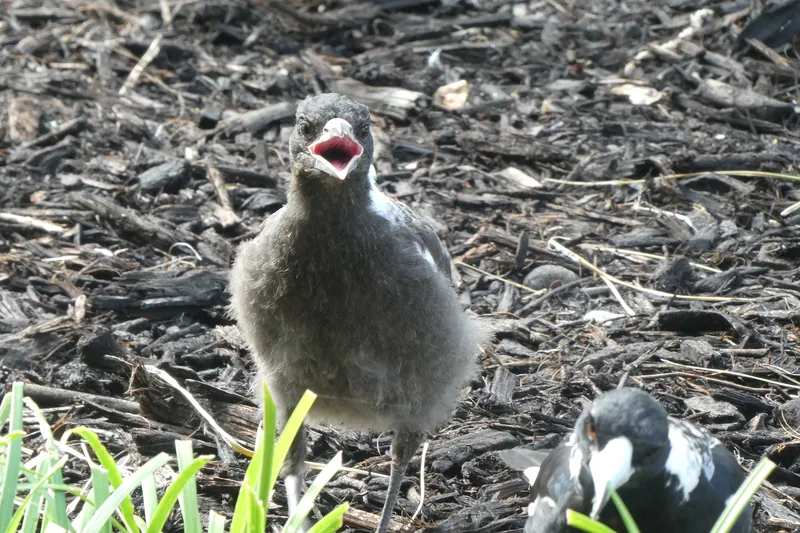
If you find one
- It has feathers: leave it. Watch from a distance. Don’t “rescue” it: DBCA’s magazine says newly fledged magpies are often “kidnapped” by people who wrongly think they’re injured, which makes swooping worse. Sources: DBCA DBCA
- It’s fluffy, with no feathers. It has probably fallen. If it looks healthy, DBCA says put it back in the nest if possible, and parent birds won’t reject a chick you’ve touched. But a magpie nest is usually 10 to 20 m up, so don’t climb: ring the Wildcare Helpline. Sources: DBCA Rowley 2022
- It’s hurt. Ring the Wildcare Helpline on (08) 9474 9055. Don’t give it food or water unless a rehabilitator says to, and never bread or milk. Source: DBCA
- It’s sick, or dead. Don’t touch it. DBCA’s advice for suspected bird flu is to avoid contact and ring the Emergency Animal Disease Hotline on 1800 675 888. More on what to do with sick and injured wildlife. Source: DBCA
The first months are the hard part. DBCA says many young die early in their independence, from bad weather, lack of food, roads and predators. In the Perth study, cars were the main known cause of death once magpies were out of the nest: 72.1% of the 36 deaths with a known cause. Worth driving your street gently in spring. Sources: DBCA Rowley 2023
The survivors stay home a while. A group can include young from the past two breeding seasons, and DBCA says parents push them out of the territory within two years. In Perth, young birds sometimes helped feed the next round of chicks, so this spring’s fledgling can be next spring’s babysitter. The grown-ups are in our magpie facts. Sources: DBCA DBCA Rowley 2022
Should I let magpies nest
in my garden? Yes: leave the nest be. Taking it is illegal without a permit, and another bird often moves in. Source: DBCA
DBCA puts it plainly: “Taking a bird or nest from the wild is illegal without a permit.” Even when it stops the swooping for a while, another nesting bird often moves in. BirdLife’s Birds in Backyards adds that removing a nest makes the birds more aggressive, and they usually just breed again. Sources: DBCA BirdLife
A truly dangerous bird is DBCA’s call, not yours. If a magpie poses a serious safety risk to people, DBCA may issue a dangerous fauna licence to destroy it, and carrying out the control is then up to the land owner or manager. Source: DBCA
Our reading of DBCA’s guidance, not legal advice.
Worried about a swooper near your place? Ring DBCA’s Wildcare Helpline on (08) 9474 9055. It gives advice and referrals, but can’t attend rescues. Sources: DBCA DBCA
While the nest is busy
- Keep dogs close. In breeding season, dogs can sniff out nests and scare off the adults, which may abandon the eggs or young. Keep yours on a lead on walks. Source: DBCA
- Keep cats in. Indoors, or in a secure run. Source: DBCA
- Put out water, not food. A bird bath with fresh water is DBCA’s pick. Wild birds “do not need supplementary food to survive or to raise their young.” Source: DBCA
- Give it six to eight weeks. If the birds swoop, detour, or live with it until the chicks can fly. Source: DBCA
- Enjoy the show. Feeding runs first, then fledglings hopping about and flying erratically while they learn. Source: DBCA
When do magpies lay eggs
in Australia? Nationally, BirdLife says magpies breed from August to November; around Perth, eggs go down from mid-August to early December. Sources: BirdLife Rowley 2022
What do you feed baby magpies?
Nothing: the family feeds them what it catches. DBCA says magpies eat mainly small animals found on the ground, such as beetles, ants, spiders, lizards and frogs. Don’t add to it: wild birds don’t need extra food to raise their young, and DBCA says not to offer a young bird food or water unless a rehabilitator advises it, and never bread or milk. Tempted to feed the grown-ups? Read can you feed magpies? first. Sources: DBCA DBCA
Sources, checked 13 October 2026
- Magpies: swooping and safety issues DBCA Fauna Note (2017; DBCA’s web listing updated 1 Mar 2024): breeding August to October; the female builds, sits about three weeks and feeds the chicks about four weeks; up to 6 eggs; a new clutch if the first brood fails; about 100 m defended; swooping mostly bluff; the eye the most common target; taking a bird or nest is illegal without a permit
- Magpies prepare to swoop into Spring DBCA news, dated 6 June 2023: magpies nest from August to December; the Wildcare Helpline for concerns; the dangerous fauna licence, and the land owner or manager’s responsibility
- Wildcare Helpline DBCA (no date shown; H5 bird flu notice on the page): young birds on the ground; feathered or fluffy; no food or water; dogs, cats and nests; bird baths; the helpline number; Emergency Animal Disease 1800 675 888
- Rowley, Rowley and Lill 2022, a long-term study of a Western Magpie population: breeding and productivity Corella 46: 46–61, peer reviewed; Guildford, Perth, 1996 to 2007: laying dates, nest trees and heights, nest materials, 21-day incubation, about 32 days in the nest, who feeds, nest success, life after fledging
- Rowley, Rowley and Lill 2023, a long-term study of a Western Magpie population: group structure and demography Corella 47: 16–32, peer reviewed; same Guildford study: known causes of death once out of the nest
- Menacing or misunderstood? Understanding swooping magpies DBCA’s LANDSCOPE magazine, spring 2018 (Smith, Burbidge and King): usually three to four eggs; chicks hatch pink, blind and hairless; juveniles greyer with darker bills; about 10 per cent of magpies swoop, 98 per cent of them males; hats and sunglasses for kids; “kidnapped” fledglings; groups and permanent territories
- It’s magpie swooping season BirdLife Australia news, dated 1 Sep 2026: swooping while there are young in the nest or just after they fledge; fewer than 10% of males swoop people; within 50 m on foot, 100 m on a bike
- Australian Magpie BirdLife Australia bird profile (no date shown): breeds August to November; 3 to 5 eggs; about 20 days on the eggs; fledging after about 35 days
- Pike, Ashton, Morgan and Ridley 2019, helpers in Western Australian magpies Frontiers in Ecology and Evolution 7, peer reviewed (University of Western Australia): the number of broods getting help was lowest in the nest and highest after fledging
- Frequently asked questions Birds in Backyards, a BirdLife Australia program (no date shown): removing a nest makes the birds more aggressive, and they usually breed again
- Nestling or fledgling? Baby bird dos and don’ts Birds in Backyards, dated 27 Aug 2021: magpie fledglings spend a lot of time on the ground
- Warne and Jones 2003, attacks on humans by Australian magpies Wildlife Research 30: 265–267, peer reviewed; Brisbane, September to October 1999: all 48 attacking birds were male
We’re an independent site, not part of DBCA or BirdLife Australia, and nobody pays us to link anywhere on this page. Where sources disagree (dates, clutch size, time in the nest), we show each one. The Perth study’s data are from 1996 to 2007, published in 2022 and 2023.
Counting birds with the kids? The 2026 Aussie Bird Count ran 19 to 25 October; our Aussie Bird Count with kids page has the next one.