Guides With kids
Nature scavenger hunt for kids
Sixteen things to find in an Australian backyard, from a spider web to a frog calling after dark. Tick them off on a phone or print one A4 sheet. One rule beats all the others: look, don’t touch.

- How long
- 20 minutesor all weekend: square 16 needs an evening
- Who
- Ages 4 to 12Explorer: four in a row. Ranger: all 16
- Where
- Any backyardor a park, a verge or the school oval
- You need
- Eyes and earsa pencil, a hat, and a torch for after dark
Nature bingo for kids
that works in almost any Australian backyard. Tap a square when you find it. Four in a row (across, down or corner to corner) makes you an Explorer. Find all 16 and you’re a Ranger.
Scavenger hunt clues for kids
who are stuck. Read one out, then go looking. A few of them have a fact worth saving for the walk back inside.
Outside WA? Every square works in most Australian backyards. The quenda, bee and frog clues are West Australian; your own state’s animals will fill those squares just as well.
- A bird singing. Shut your eyes for one minute and count the different songs. Mornings are noisiest.
- A spider web. Look for wheels between branches, sheets in the grass and tangles under the eaves. Look as close as you like, but keep your fingers out.
- A feather. Leave it where it lies. Is it fluffy (to keep warm) or long and stiff (for flying)?
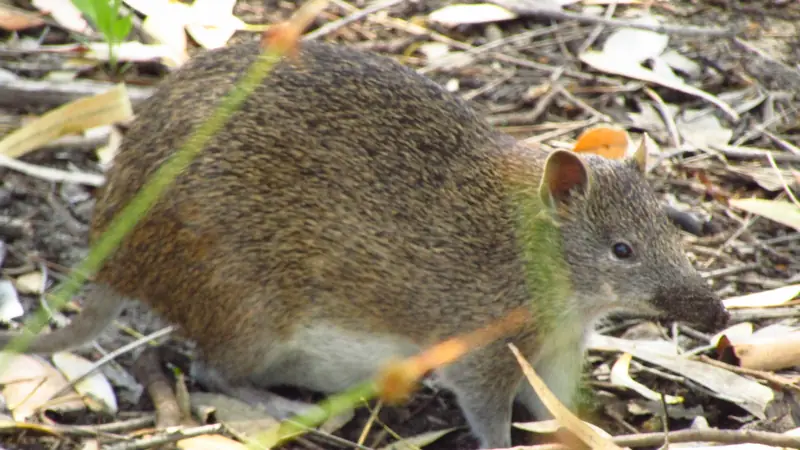
- Diggings in the soil. Little cone-shaped holes in a lawn or garden bed? In south-west WA, that may be a quenda, a native bandicoot nosing out grubs, beetles and fungi. DBCA More on quenda
- A bee on a flower. The bush around Perth has at least 50 kinds of native bee, and blue-banded bees are the ones you’re most likely to see. Watch from a step back: a bee on a flower is busy, not looking for trouble. WA Museum
- An ant trail. Follow the line with your eyes, not your feet. Is anyone carrying something?
- A chewed leaf. Neat holes, bitten edges or wiggly tunnels inside the leaf: something has been eating. Can you find who?
- Something with eight legs. Spiders are the usual answer. Count the legs from a safe distance, and don’t pick it up.
- A bird on the ground. Watch its feet. Some birds walk, some hop, some do both.
- Bird poo. The square everyone remembers. Look, don’t touch, then look up: who’s been sitting there?
- A hole in a tree. Tree hollows are homes. Carnaby’s cockatoos nest in hollows in old eucalypts, and a tree has to be at least 100 years old to have a hollow big enough. BirdLife
- A snail trail. The silvery path on paths and walls, best in the morning. Where does it lead?
- Three flower colours. Three different colours in one yard. Bonus: a flower with a visitor.
- A visitor at the water. A bird bath or a puddle. Water is the right way to welcome birds: DBCA asks people not to feed wild birds, and to keep fresh water in a bird bath instead. DBCA
- A lizard in the sun. Reptiles move around more as the weather warms, especially in early spring in the south-west. Look, don’t touch. If it’s a snake, stay back and tell a grown-up. DBCA
- A frog calling after dark. Step outside after sunset and listen. Perth’s most common garden frog, the motorbike frog, sounds like a motorbike changing gears. WA Museum
How to do a scavenger hunt
with kids: give it a time limit, a level and a partner. Then get out of the way.
- Explorer
- Four squares in a row: across, down or corner to corner. A grown-up reads the clues and holds the pencil. Twenty minutes is plenty.
- Ranger
- All 16, with a note of where each one was found. Square 16 means an evening round, so it can stretch over a weekend.
- Take a photo, not the thing. A phone camera turns every find into a keepsake, and the yard stays as it was.
- Work in pairs. One spots, one ticks. Swap halfway.
- Quiet voices, slow moves. BirdLife’s birdwatching code asks for both, and for a distance that doesn’t stress birds, especially near nests. BirdLife
- Hats on. Healthy WA says to use sun protection whenever the UV Index is 3 or above. Healthy WA
- Play it again next season. Same squares, different answers: the flowers, frogs and lizards change through the year.
Want more? Try the Aussie Bird Count with kids (19 to 25 October 2026), or pick another of our backyard activities for kids.
Rules for a nature scavenger hunt
are simple: it’s their yard too. Find, look, and leave everything as it was.
Do
- Look as closely as you like, and take photos.
- Keep fresh water in the bird bath. DBCA
- Keep back from snakes, and keep little kids and pets away. DBCA
- Wear a hat and sunscreen when the UV Index is 3 or above. Healthy WA
Don’t
- Feed animals to bring them closer. In WA that’s an offence without lawful authority. BC Act s 155 DBCA
- Pick up, chase or catch animals. BirdLife
- Touch a sick or dead bird. DPIRD
- Lift rocks or logs: they’re someone’s roof.
Found a sick or dead bird? Don’t touch it. A grown-up rings the Emergency Animal Disease Hotline on 1800 675 888: H5 bird flu has been found in WA. DPIRD An injured animal? A grown-up rings the Wildcare Helpline on (08) 9474 9055. DBCA Snakebite? Call 000. DBCA
Free nature scavenger hunt printable
questions, each answered in its first line.
Is this scavenger hunt free?
Yes, and there’s no sign-up. Print it as often as you like, for home or a classroom. The ticks you make on a phone stay on that phone: this page doesn’t send them anywhere.
What age is a nature scavenger hunt for?
About 4 to 12, with two levels. Explorers (about 4 to 7) go for four in a row with a grown-up reading the clues. Rangers (about 8 to 12) go for all 16 and note where they found each one.
Can kids collect feathers and leaves?
On this hunt, no: take a photo instead. That keeps the yard as it was. Feathers especially: H5 bird flu has been found in WA, and the state’s advice is not to touch or move sick or dead birds. DPIRD
Does it work outside Western Australia?
Yes. Every square works in most Australian backyards. A few clues name West Australian animals, like the quenda and the motorbike frog; elsewhere, your local diggers and frogs fill the same squares.
What if we can’t find a frog?
Count it if you heard one. Frogs are far easier to hear than see. A still evening after rain is a good time to try. Still nothing? It’s a reason to play again next season.
Sources, checked 12 October 2026
- Quenda DBCA Fauna Notes: quenda eat earthworms, beetles and their larvae, and fungi, tubers and bulbs, “which they find while digging conical-shaped holes in the ground”
- Native bees WA Museum: “At least fifty species of bees inhabit the bushlands around Perth”; blue-banded bees are “the most likely to be seen”
- Carnaby’s black-cockatoo BirdLife Australia: nests in hollows in old eucalypts, which must be at least 100 years old to have hollows large enough
- Wildcare Helpline DBCA: “Do not feed wild birds”; fresh water in a bird bath; the helpline number, (08) 9474 9055
- Reptiles in and around the house DBCA Fauna Notes (2017): reptiles move around more as it warms, particularly in early spring in the south-west; with a snake, “Keep children and animals away”; call 000 if bitten
- Motorbike frog WA Museum FrogWatch: the most commonly encountered frog in Perth suburban gardens; its call sounds like a motorbike changing gears
- Ethical birdwatching BirdLife Australia: keep a distance that doesn’t stress birds, especially nesting ones; walk slowly and speak quietly; avoid handling birds
- How to be SunSmart Healthy WA (last reviewed 4 Jan 2021): “You need to use sun protection when the UV Index is 3 or above”
- Biodiversity Conservation Act 2016 (WA), s 155 “A person must not feed fauna unless the person has lawful authority to feed it.” Our reading of the Act, not legal advice
- H5 bird flu in Western Australia DPIRD: don’t touch or move sick or dead wild birds; report them to the Emergency Animal Disease Hotline, 1800 675 888
- Supporting wildlife in urban areas DBCA: “Feeding wildlife is illegal without an authority”
The hunt is ours: squares without a source are prompts to go and look, not facts. We’re an independent site, and nobody pays us to link anywhere on this page.