Guides Black swan
Nesting in the south: mostly May to September
Can you feed swans?
No. Black swans graze their own underwater pastures, and in WA it’s an offence to feed native wildlife without lawful authority. Australian Museum BC Act s 155 DBCA
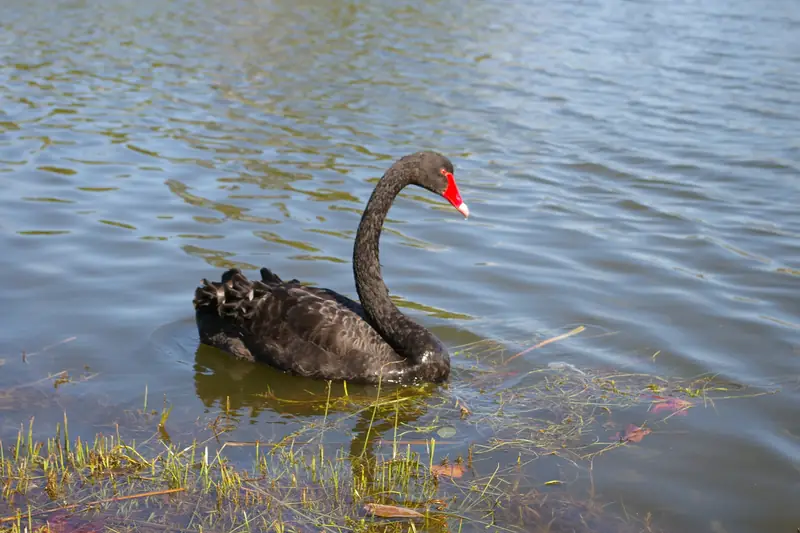

- Size
- 1.2 to 1.4 m 120 to 142 cm long Australian Museum. Males grow to about 1.3 m and females to 1.2 m DBCA Males grow to about 130 centimetres and females to about 120 centimetres.
- Eats
- Water plants and algaeand sometimes grazes grass near the water DBCA Australian Museum
- Flies
- At nightand rests by day with other swans Australian Museum
- In WA
- Protectedlike all native animals DBCA, and not on the threatened list DBCA, Jul 2026
Can you feed swans
bread, peas or lettuce? No, none of them. WA law doesn’t sort food into good and bad: offer a native animal anything you mean it to eat, and that’s feeding. BC Regs reg 3
-
Bread, white or brownNo
DBCA doesn’t mince words: “NEVER feed wild birds bread or milk”. DBCA Swans fed bread and scraps can come to depend on people and lose the instinct to forage, says DBCA, and the adults may not teach their young to find real food. DBCA
-
Frozen peas, lettuce, oats or cornNo
The kinder-sounding swap for bread. WA law makes no exception for it. BC Regs reg 3 BC Act s 155 DBCA says food people offer is often “highly processed or not suitable” and can make animals sick. DBCA, 2023
-
Bird seed or “duck food”No
Same rule. A black swan’s pantry is underwater plants and algae, reached by plunging that long neck into the water. Australian Museum
-
From your handNo
Swans used to handouts grow less wary of predators, says DBCA, which can make them easier pickings for dogs, cats and foxes. DBCA
-
A cygnet on its ownNo
Don’t offer food or water unless a wildlife rehabilitator tells you to. Ring the Wildcare Helpline on (08) 9474 9055 for advice. DBCA Cygnets can swim and feed themselves from the day they hatch. Australian Museum
What do black swans eat
in the wild? Water plants and algae, not fish. The Australian Museum calls the black swan “a vegetarian”, and none of our sources lists fish. DBCA adds the small invertebrates hitching a ride on its plants. Australian Museum DBCA
- On the bank It sometimes waddles out to graze grass near the water, clumsy on land. DBCA BirdLife
- Down to about 1 m Algae and water weeds, mostly submerged, reached by plunging that long neck under. Australian Museum DBCA
- On those plants The small invertebrates living on them, swallowed with the salad. DBCA
- Fish Not on the menu. Neither the Museum, BirdLife nor DBCA names fish in a black swan’s diet. Australian Museum BirdLife DBCA
- 1 m
- About the deepest water a black swan can feed in, neck at full stretch. Australian Museum
- 40 m
- Of clear water: its take-off runway. BirdLife
- At night
- When black swans fly, while you’re asleep. By day they rest with other swans. Australian Museum
Injured swan what to do
first? Don’t chase it. Ring the Wildcare Helpline on (08) 9474 9055. DBCA
- Keep back and keep watching. A black swan is a big bird, and DBCA warns that injured animals “may be stressed and behave unpredictably”. Don’t try to catch it yourself. DBCA
- Ring the helpline. Volunteers answer for DBCA and point you to a carer or vet. Note where and when you saw the swan, and what state it was in. DBCA DBCA
- Sick or dead? Don’t touch it. Ring the Emergency Animal Disease Hotline on 1800 675 888. H5 bird flu has been found in WA, and swans are among its natural hosts. DPIRD
- Fishing line or a hook on a swan? Ring the Wildcare Helpline rather than trying to catch it. DBCA
- Hooked a bird while fishing? Don’t cut the line. DBCA’s River Guardians program says to reel the bird in slowly and ring WA Seabird Rescue (number on its page). DBCA River Guardians
Lost fishing gear is a real risk on the water. DBCA lists fishing tackle “(including hooks and line)” among the litter that harms wildlife. DBCA In Sydney, Taronga says hooks and line are the most common reason swans and pelicans come into its wildlife hospital. Taronga, 2019
- 29 km+
- Of fishing line collected each year from the Reel It In bins in the Swan Canning Riverpark. DBCA River Guardians
- 4,700
- Hooks and sinkers collected from the same bins each year. DBCA River Guardians
- Up to 70%
- Of deaths of mute and Bewick’s swans put down to lead fishing weights, in parts of Europe with recreational fishing. Wood and Newth 2024
Why lead matters. Swans pick up grit to help digest their food, and in Europe they can swallow lost lead sinkers along with it. Wood and Newth 2024 In Australia, studies have found raised lead in black swans from spent shotgun pellets: about 40% of 50 swans at Bool Lagoon in South Australia, and over 17% of blood samples in Tasmania. Koh and Harper 1988 Smith 1995 We found no Australian study of black swans and sinkers, so take lost tackle home to be safe.
Black swan nesting season
in WA? In the south, mostly May to September. DBCA says breeding can happen at any time of year, but in the north it’s usually February to May. DBCA
Breeding in the south DBCA fact sheet
Breeding in the south Australian Museum
Breeding in the north DBCA and Australian Museum
- 5 or 6
- Eggs in a usual clutch, says DBCA, and up to 9. The Museum says up to 10. DBCA Australian Museum
- 18 months
- Old enough to breed. Most start before they turn three. DBCA
- Day one
- Fluffy grey cygnets swim and feed themselves the moment they hatch. Australian Museum
- Give nests a wide berth. A nest is a mound of plants on reeds, on a small island, in tall bushes near the water, or floating in deeper water. DBCA Australian Museum Chasing, following or harassing a native animal counts as disturbing it, which is an offence without lawful authority (fine up to $50,000). BC Act s 5, s 153 Our reading of the Act, not legal advice.
- Keep dogs on a lead. On the Swan River, swans favour quiet, plant-lined spots that dogs can’t easily reach, and DBCA says disturbance is an ongoing problem. DBCA
- Never move eggs or a cygnet yourself. Taking or keeping a native animal without lawful authority is an offence, and the Act’s meaning of “animal” includes eggs. BC Act s 5, s 149, s 152 If a cygnet looks lost or hurt, ring the Wildcare Helpline on (08) 9474 9055. DBCA Our reading of the Act, not legal advice.
Is it illegal to feed
black swans in WA? Yes, unless you have lawful authority. The top searches, answered up front.
Is it illegal to feed swans in Western Australia?
Yes, unless you have lawful authority. Section 155 of the Biodiversity Conservation Act 2016 says: “A person must not feed fauna unless the person has lawful authority to feed it.” The maximum fine is $20,000, and an infringement notice for an individual is $400. BC Act s 155 BC Regs Sch 9 The regulations define feeding as supplying anything “intending it to be eaten by fauna”, including offering it, so peas and lettuce count as much as bread. BC Regs reg 3 DBCA says it plainly: “It is therefore an offence to feed wildlife without lawful authority.” DBCA
This is WA law. If you’re in another state, check your state wildlife agency’s rules.
Our reading of the Act, not legal advice.
Do swans eat fish?
Black swans don’t, as far as our sources go. The Australian Museum calls the black swan “a vegetarian” that eats algae and water weeds. DBCA says it feeds mainly on submerged water plants, along with the small invertebrates living on them, and grazes grass near water. Neither mentions fish. Australian Museum DBCA
Are black swans aggressive?
None of the official pages we read describes them that way, but feeding can make wild animals pushy. DBCA lists aggression among the problems feeding wildlife can cause, and warns that reliance on handouts “can lead to aggressive behaviour and pose a safety risk to people.” DBCA DBCA, 2023 Give nesting swans plenty of room.
Are black swans protected?
Yes, like all native animals in WA. DBCA says native fauna are protected under both State and Commonwealth law. DBCA They aren’t threatened: the black swan isn’t on DBCA’s threatened and priority fauna list, and it is “Least Concern” worldwide. DBCA, Jul 2026 BirdLife
Are black swans native to WA?
Yes. Black swans live across Australia except Cape York Peninsula, and are commonest in the south. Australian Museum The Dutch navigator Willem de Vlamingh named the Swan River after them in 1697. Once abundant there, they’re now far less common on their own river, says DBCA. DBCA They were introduced to New Zealand. Australian Museum
What do baby swans eat?
They find their own food from the start. Cygnets can swim and feed themselves as soon as they hatch. Australian Museum If one is alone or hurt, don’t feed it: ring the Wildcare Helpline on (08) 9474 9055. DBCA
Sources, checked 9 October 2026
- Black Swan (Cygnus atratus) fact sheet DBCA (undated): size; diet of submerged plants and their invertebrates, and pasture near water; breeding February to May in the north and May to September in the south; nests, eggs, moult; harm from bread and scraps; habitat loss, disturbance and dogs on the Swan Canning Riverpark
- Wildcare Helpline DBCA: the helpline number; “NEVER feed wild birds bread or milk”; why feeding harms wildlife; no food or water unless a rehabilitator advises; fishing tackle as litter; H5 bird flu notice
- Biodiversity Conservation Act 2016 (WA), s 5, s 153, s 155 current version as at 25 Sep 2025: feeding fauna; the meaning of “disturb”; disturbing fauna
- Biodiversity Conservation Regulations 2018 (WA), reg 3 and Schedule 9 the meaning of “feed”; infringement amounts; current version as at 31 Mar 2025
- Supporting wildlife in urban areas DBCA: “It is therefore an offence to feed wildlife without lawful authority.”
- Public urged not to feed native wildlife DBCA news, 4 Jul 2023: names ducks and swans; food offered may be “highly processed or not suitable”; reliance can lead to aggression
- Living with native wildlife DBCA: native fauna are protected under State and Commonwealth law
- Threatened and Priority Fauna List, July 2026 DBCA, updated 31 Jul 2026: the black swan is not listed
- Black Swan Australian Museum, updated 18 Jul 2024: 120 to 142 cm; “a vegetarian”; reaches water up to 1 m deep; flies at night; breeding seasons; nest, clutch and cygnets; range
- Black Swan Birds in Backyards (BirdLife Australia): needs 40 m or more of clear water to take off; clumsy on land; vegetarian
- Black Swan profile BirdLife Australia: IUCN Least Concern
- H5 bird flu in Western Australia DPIRD, updated 9 Oct 2026: first found in WA on 19 June 2026; ducks, swans and geese are natural hosts; don’t touch sick or dead birds; report on 1800 675 888
- Reel It In DBCA River Guardians: 76 fishing line bins in the Swan Canning Riverpark (2026), collecting over 29 km of line and 4,700 hooks and sinkers a year
- Help, I’ve caught a bird DBCA River Guardians: don’t cut the line; reel the bird in slowly; ring WA Seabird Rescue
- Injured swan story Taronga Conservation Society, 1 Jun 2019: hooks and line are the most common reason swans and pelicans are admitted to its wildlife hospital
- Wood and Newth 2024, swans and lead fishing weights in Europe Wildfowl Special Issue 7: 27–56, a systematic review: swans foraging for grit swallow lost lead weights; up to 70% of swan deaths in areas with recreational fishing
- Koh and Harper 1988, lead poisoning in black swans at Bool Lagoon, South Australia Wildlife Research 15(4): 395–403: about 40% of 50 swans had excessive lead exposure from spent shot
- Smith, Goede and Blackhall 1995, lead in Tasmanian waterfowl from duck shooting Wildlife Research 22: 611–623: over 17% of black swan blood samples had raised lead
- Helping sick or injured native wildlife DBCA: injured animals “may be stressed and behave unpredictably”; note the place, time and condition
DBCA’s black swan fact sheet carries no date, so we checked each point against the Australian Museum and BirdLife too. Where they differ (breeding months, clutch size), we show both.
Also on this site: can you feed magpies? and should you feed ducks bread?