Guides Ducks
Duckling season in WA runs from July to September.
Should you feed ducks bread?
No. Bread is junk food for ducks, much of it ends up rotting in the water, and in WA it’s an offence to feed native wildlife without lawful authority. RSPCA Griffith study BC Act s 155
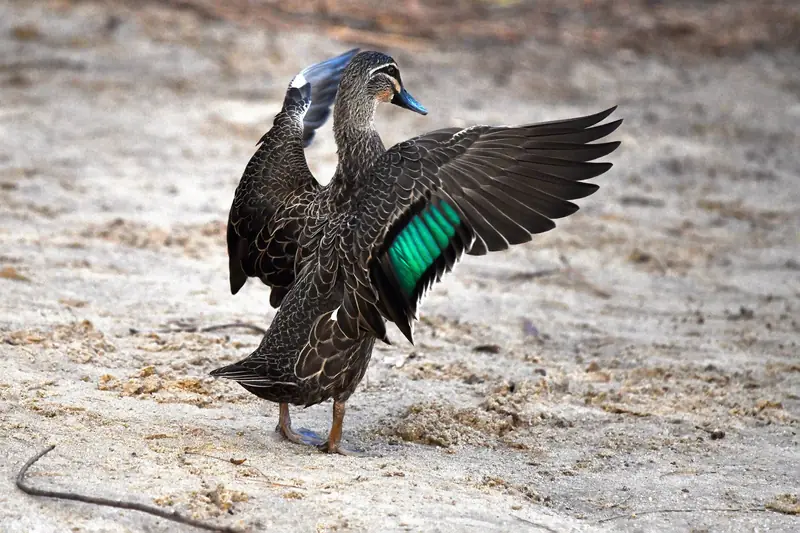

- Size
- 50 to 60 cm Pacific black duck Australian Museum. The Australian wood duck is 44 to 50 cm. Australian Museum Pacific black duck 50 to 60 centimetres long, Australian wood duck 44 to 50 centimetres, both much longer than an A4 page (29.7 centimetres).
- Eats
- Mostly plantsplus molluscs, crayfish, water insects and their larvae, found by dabbling Australian Museum
- Breeds in WA
- July to Septemberabout 12 eggs, hatching after about 28 days DBCA
- In WA
- Protectedlike all native animals DBCA, and not on the threatened list DBCA, Jul 2026
Why not feed ducks
bread? It fills them without feeding them, fouls the water and pulls a crowd. Wild ducks do fine on their own.
- Party pies, for ducks. RSPCA Australia: “Bread has a low nutritional value compared to foods that ducks would naturally find in the wild,” and ducks fed a lot of it can become malnourished. BirdLife calls it “empty calories”. RSPCA BirdLife
- Much of it is never eaten. At one Brisbane lake, birds ate only 44% of the bread people threw. Griffith study BirdLife says bread left rotting in water “can even cause a build-up of toxic algae”. BirdLife
- Mouldy crusts are worse. BirdLife warns that mould spores “can cause Aspergillosis, a potentially fatal respiratory infection.” BirdLife
- Crowds breed disease and fights. DBCA says feeding packs animals together, which can lead to outbreaks of disease and to more aggression, stress and injuries. DBCA
- It teaches them to wait for us. Fed wildlife can come to depend on handouts. DBCA RSPCA Australia notes the catch: people move house or go on holiday. RSPCA And in WA, feeding native wildlife without lawful authority is an offence. BC Act s 155
Does feeding ducks bread
hurt them? Follow the bread. In the first Australian study to count it, Griffith University researchers sat by ten Brisbane lakes tallying slices. Sliced bread was “overwhelmingly” what people brought, and plenty went uneaten. Chapman and Jones 2009
Underwood Park, Priestdale 104 slices · 44% eaten
About 58 slices not eaten in four hours. The authors reckon about six and a half loaves a day go into this lake.
Riverdale Parklands, Meadowbank 98 slices · 88% eaten
About 11 slices not eaten in four hours.
- 4.9 slices
- Thrown per feeding visit on average, in about four and a half minutes flat. Chapman and Jones 2009
- 74%
- Of the ducks being fed were Pacific black ducks: the regulars, and the only species fed at all ten lakes. Chapman and Jones 2009
- 6%
- Were Australian wood ducks, though they were about a quarter of the waterbirds counted. They’d rather graze the lawn. Chapman and Jones 2009
What the study didn’t find. A follow-up at ten south-east Queensland lakes watched 200 ducks and found they spent more time finding natural food than eating bread; the bread “appeared to have little impact” on that time. The authors suspect a few dominant birds hog most of it. Chapman and Jones 2011 So the ducks aren’t living on bread. The case against it is the empty calories, the mould, the crowding, and what’s left in the water. BirdLife DBCA
What to feed ducks
instead of bread? Nothing. They’ve got it sorted. DBCA: “Wild birds do not need supplementary food to survive or to raise their young.” DBCA
Do
- Watch them work. Black ducks dabble for plants and small water animals; wood ducks mow the grass and clover. AM: black duck AM: wood duck
- Enjoy wild ducks “just being themselves”, as South Australia’s environment department puts it. SA DEW
- Leave the bread at home and count ducks with the kids: the Aussie Bird Count runs 19 to 25 October 2026.
- Keep pets away from a duck’s nest. DBCA
- Report a sick or dead bird on 1800 675 888. DPIRD
Don’t
- Throw them anything: not bread, and not oats, peas, corn, rice or seed. In WA any food counts. BC Regs reg 3 BC Act s 155
- Dump unwanted pet ducks at a lake. Released mallards interbreed with black ducks, and the Brisbane study found domestic waterbirds at eight of ten lakes. Australian Museum Chapman and Jones 2009
- Go onto or near the road to herd ducks across. DBCA
- Move ducklings unless they’re in immediate danger. DBCA
- Touch or move a sick or dead bird. DPIRD
When do ducks have
babies in WA? From July to September, says DBCA. That’s when ducklings pop up in backyards, pools and on roads. DBCA
Duck breeding, WA DBCA Wildcare Helpline page
- The nestUsually tucked under shrubs or in long grass, sometimes in a tree hollow off the ground. DBCA Wood ducks pick tree holes near water. Australian Museum
- Last egg laidThe female starts sitting once the last of about 12 eggs is laid. DBCA
- About 28 days laterThe eggs hatch. DBCA
- Next morningDay-old ducklings follow Mum to water. DBCA
- The weeks afterShe may leave them for a few hours while she feeds. Perfectly normal. DBCA
Ducks in your yard, pool or street
Most of the time, the kindest help is room.
- A nest in the garden. Leave it alone and keep pets away. DBCA says it’s an offence to disturb nesting birds or remove eggs. DBCA
- Ducklings in the pool. Put in a ramp they can walk up, and turn off the filter so they aren’t sucked in. A pool cover is the best way to keep ducks out. DBCA
- Ducks crossing the road. Slow down. Don’t go onto or near the road to help: ring the police on 131 444, who can stop traffic if needed. DBCA
- Ducklings on their own. Watch from a distance; Mum may be off feeding for a few hours. Don’t move them unless they’re in immediate danger. Unsure? Ring the Wildcare Helpline on (08) 9474 9055. DBCA
- A hurt duck. Ring the Wildcare Helpline on (08) 9474 9055 for advice. Don’t give it food or water unless a rehabilitator says to (“Definitely NEVER bread or milk!”). DBCA
- A sick or dead duck. Don’t touch it. Ring the Emergency Animal Disease Hotline on 1800 675 888. H5 bird flu was found in a seabird at Esperance in June 2026, and ducks and swans are natural hosts of bird flu viruses. DPIRD
Are ducks native to
Australia? Most you’ll meet on a city lake are. Chapman and Jones 2009 Three locals and one blow-in. The bars show the share of ducks seen being fed bread in the Brisbane study.
-
Pacific black duck
Anas superciliosa Native
Found throughout Australia. Dabbles for plants, molluscs, crayfish and water insects. Australian Museum
74% of ducks fed 2009 -
Australian wood duck
Chenonetta jubata Native
A “goose-like” duck with a dark brown head and pale grey body. Grazes grasses, clover and herbs. Nests in tree holes. Australian Museum
6% of ducks fed 2009 -
Hardhead
Aythya australis Native
Feeds in the shallows like the black duck, and often dives for food in deeper water. One of three native ducks seen being fed bread in the Brisbane study. Chapman and Jones 2009
-
Mallard
Anas platyrhynchos Introduced
A close relative of the black duck, close enough to interbreed where mallards have been released. Australian Museum The Brisbane study found mallards at five of ten lakes, and likely hybrids at three. Chapman and Jones 2009
Black swans share the same lakes and the same bread problem. They get their own guide: should you feed swans?
Can you feed ducks
oats, peas or corn? Not in WA, and it doesn’t help them anywhere. Your most-searched questions, answered in the first line.
Is it illegal to feed ducks in Australia?
In Western Australia, yes, unless you have lawful authority. Section 155 of the Biodiversity Conservation Act 2016 says: “A person must not feed fauna unless the person has lawful authority to feed it.” The maximum fine is $20,000, and an infringement notice for an individual is $400. BC Act s 155 BC Regs Sch 9 DBCA names ducks and swans when it asks people not to feed wildlife. DBCA
The rules differ between states, and we haven’t yet checked each one for this page. Outside WA, ask your state wildlife agency or your council.
Our reading of the Act, not legal advice.
Can you feed ducks oats, corn or frozen peas?
Not in WA, where any food counts. The regulations define feeding as supplying “matter intending it to be eaten by fauna”, so oats, peas, corn, rice and seed are covered as much as bread. BC Regs reg 3 Those overseas “duck-safe” food lists come from places with different rules and different birds. And peas don’t fix the crowding and dependence DBCA warns about. DBCA
Our reading of the Act, not legal advice.
Does feeding ducks bread cause angel wing?
It hasn’t been proven. Angel wing is a deformity in which the end of a young bird’s wing twists outward. Research on farmed geese links it to rich, high-protein early diets and to genes. Lin et al. 2025 We found no study testing bread in wild Australian ducks, so we don’t claim it. Bread’s other problems are reason enough. BirdLife
What do ducks eat in Australia?
Mostly plants, plus small water animals. Pacific black ducks eat mostly plant material, with molluscs, crayfish, aquatic insects and larvae. Australian Museum Australian wood ducks eat grasses, clover and other herbs, and sometimes insects. Australian Museum
Can you feed ducklings?
No. Mum takes them to water and food. She leads them to water the morning after they hatch, and may leave them for a few hours while she feeds. Watch from a distance, and ring the Wildcare Helpline on (08) 9474 9055 if you’re worried. DBCA
Sources, checked 9 October 2026
- Wildcare Helpline DBCA: the helpline number; ducks breed July to September; nests, about 12 eggs, hatching after about 28 days; pools, roads (police 131 444), leaving ducklings be; “Do not feed wild birds”, as they don’t need extra food; first aid (“Definitely NEVER bread or milk!”)
- Biodiversity Conservation Act 2016 (WA), s 155 as at 25 Sep 2025: feeding fauna without lawful authority, fine up to $20,000
- Biodiversity Conservation Regulations 2018 (WA) as at 31 Mar 2025: reg 3 defines “feed”; reg 51 lists authorised feeding; Schedule 9 sets the $400 infringement for an individual
- Supporting wildlife in urban areas DBCA: feeding wildlife is illegal without an authority; dependence, crowding, disease, aggression
- DBCA news: public urged not to feed native wildlife published 4 Jul 2023: names ducks, swans, quenda and kangaroos
- Chapman and Jones 2009, “Just feeding the ducks: quantifying a common wildlife-human interaction” The Sunbird 39(2): 19–29, Griffith University: ten Brisbane lakes; 4.9 slices and 4.5 minutes per feeding visit; share of bread eaten per lake; species fed; domestic ducks, mallards and hybrids
- Chapman and Jones 2011, “Foraging by native and domestic ducks in urban lakes: behavioural implications of all that bread” Corella 35(4): 101–106: 200 ducks watched; bread had little impact on time spent foraging naturally
- What are the animal welfare issues associated with feeding wildlife? RSPCA Australia, updated 10 Mar 2026: bread is low in nutrition and can leave ducks malnourished; dependence
- A guide to feeding wild birds in Australia BirdLife Australia (no date shown): bread is empty calories; mould and aspergillosis; uneaten bread and toxic algae
- Pacific black duck Australian Museum, updated 23 Jul 2024: 50 to 60 cm; diet; throughout Australia; interbreeds with released mallards
- Australian wood duck Australian Museum, updated 12 Jul 2024: 44 to 50 cm; grasses, clover and herbs; nests in tree holes
- H5 bird flu in Western Australia DPIRD, updated 9 Oct 2026: first Australian case in a seabird at Esperance, 19 Jun 2026; don’t touch sick or dead birds; report on 1800 675 888; waterfowl are natural hosts
- Threatened and Priority Fauna List, July 2026 DBCA: Pacific black duck and Australian wood duck are not listed
- Living with native wildlife DBCA: all native fauna is protected under State and Commonwealth law
- Lin et al. 2025, “Heredity of angel wing and growth performance in White Roman geese” Animal Bioscience 38(11): 2392–2402: what angel wing is; links to high-protein early diets and genes in farmed geese
- Ducks in parks SA Department for Environment and Water, 12 Oct 2021: watch wild ducks finding their own food instead of feeding them
The Brisbane studies are the only published Australian counts of duck feeding we found. Where a figure comes from Queensland, we say so.